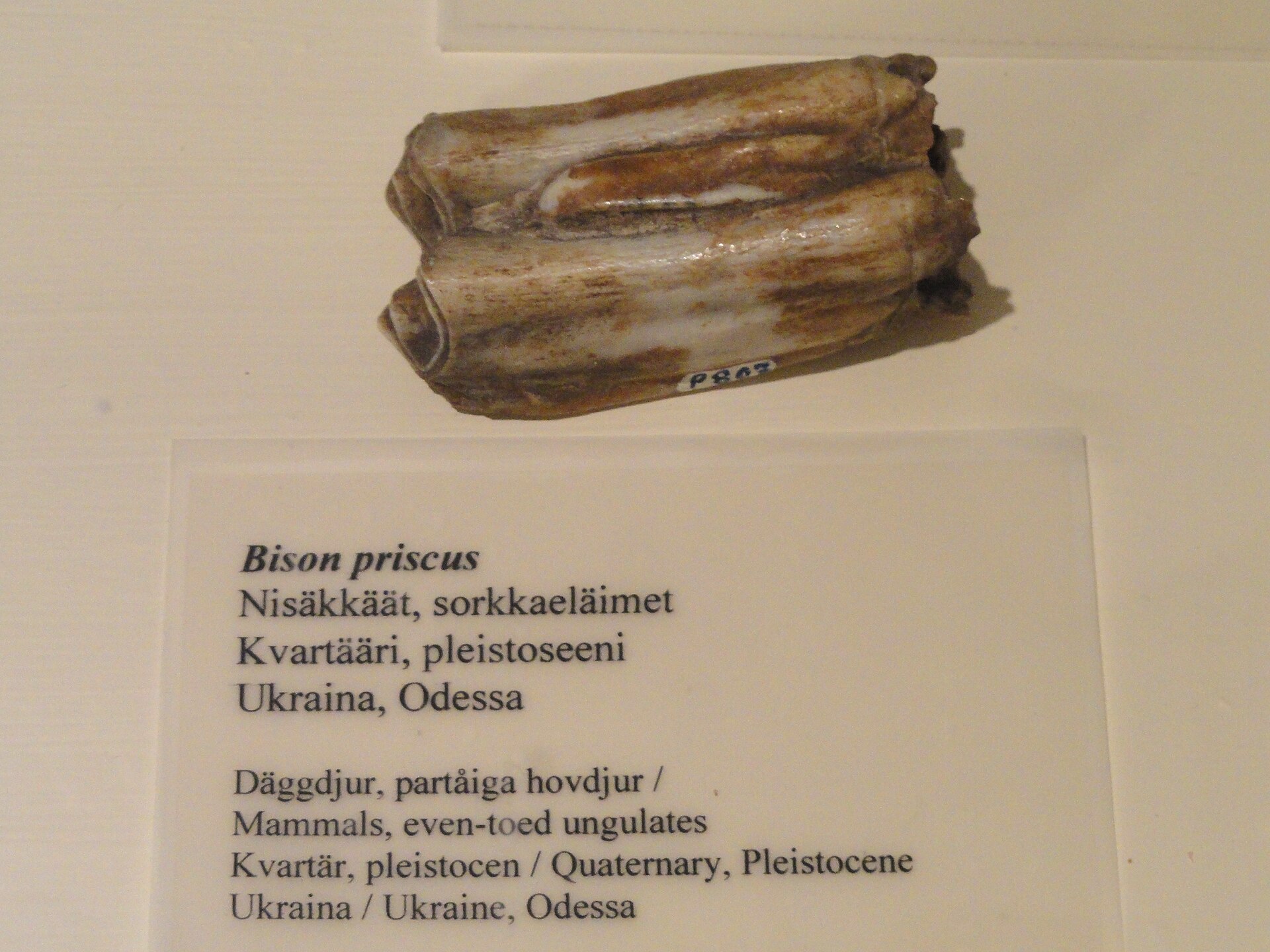
Steppe bison — Bison priscus
Geologic period: Pleistocene
Age: Pleistocene.
Feeding: Grazing herbivore.
Evidence: Skulls, skeletons and even mummified remains directly preserve steppe-bison anatomy.
Why it matters: Steppe bison were important members of Ice Age grassland ecosystems and help document migration between Eurasia and North America.
Plain Language Identity: A large Pleistocene bison that ranged widely across northern Eurasia and North America.
What You Are Looking At: A fossil skull of Bison priscus.
Ecosystem: Pleistocene steppe and tundra ecosystems.
Source Urls: https://naturalhistory.si.edu/visit/virtual-tour/current-exhibits/deep-time-virtual-tour-fossil-list; https://www.si.edu/object/nmnhpaleobiology_3579952
Find Location: Smithsonian material includes Alaska, United States.
Enrichment Method: SAGE curated research pass; title + scientific name + source scene matched; chronology and taxonomy conflicts retained rather than silently corrected; evidence separated from inference
Scientific name: Bison priscus
Evidence / representation: comparative_taxon_visual
comparative_taxon_visual
After the Dinosaurs: Mammals, Ice Ages and the World We Inherited.
Media license: CC0
http://creativecommons.org/publicdomain/zero/1.0/deed.en
This object page stays inside SAGE Museum. The Smithsonian link below is provided only as the original scholarly collection record. It opens separately.
VIEW ORIGINAL SMITHSONIAN RECORD ↗