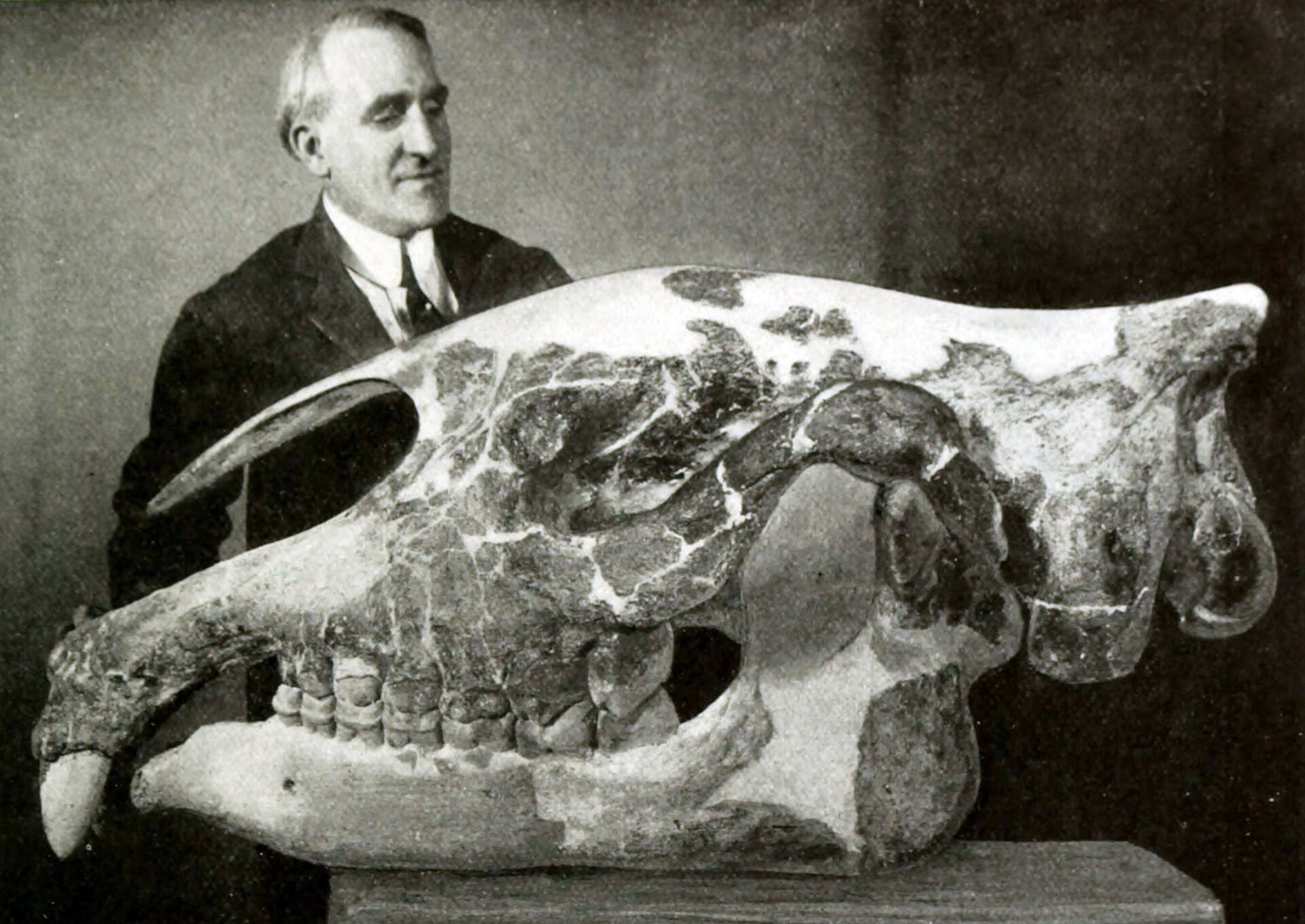
Long-necked rhinoceros — Paraceratherium transouralicum
Geologic period: Cenozoic — specimen chronology flagged for review
Age: Smithsonian's current catalog record labels this specimen Miocene. Broader Paraceratherium literature is commonly associated with Oligocene deposits, so SAGE retains the catalog record but flags the age for specimen-level review.
Feeding: Herbivorous.
Evidence: The skull provides direct evidence for cranial anatomy. Body size and posture are reconstructed using associated skeletons and related specimens.
Why it matters: Paraceratherium demonstrates the extreme body sizes achieved by hornless rhinocerotoids during the Cenozoic.
Plain Language Identity: A gigantic hornless rhinocerotoid and one of the largest terrestrial mammals known.
What You Are Looking At: A cast representing the enormous skull of Paraceratherium transouralicum.
Ecosystem: Asian Cenozoic terrestrial ecosystem.
Source Urls: https://naturalhistory.si.edu/visit/virtual-tour/current-exhibits/deep-time-virtual-tour-fossil-list; https://www.si.edu/object/paraceratherium-transouralicum-pavlova-1922:nmnhpaleobiology_3391355
Provenance Note: The Smithsonian catalog currently combines a Miocene age field, Hsanda Gol Formation terminology and a Pakistan locality. SAGE preserves those source fields but does not silently reconcile the apparent chronology/provenance conflict.
Open Questions: Specimen-level age and formation require additional catalog verification before a narrow numeric date is published.
Enrichment Method: SAGE curated research pass; title + scientific name + source scene matched; chronology and taxonomy conflicts retained rather than silently corrected; evidence separated from inference
Scientific name: Paraceratherium transouralicum
Evidence / representation: historical_photo_of_real_skull
historical_photo_of_real_skull
After the Dinosaurs: Mammals, Ice Ages and the World We Inherited.
Media license: Public domain
This object page stays inside SAGE Museum. The Smithsonian link below is provided only as the original scholarly collection record. It opens separately.
VIEW ORIGINAL SMITHSONIAN RECORD ↗