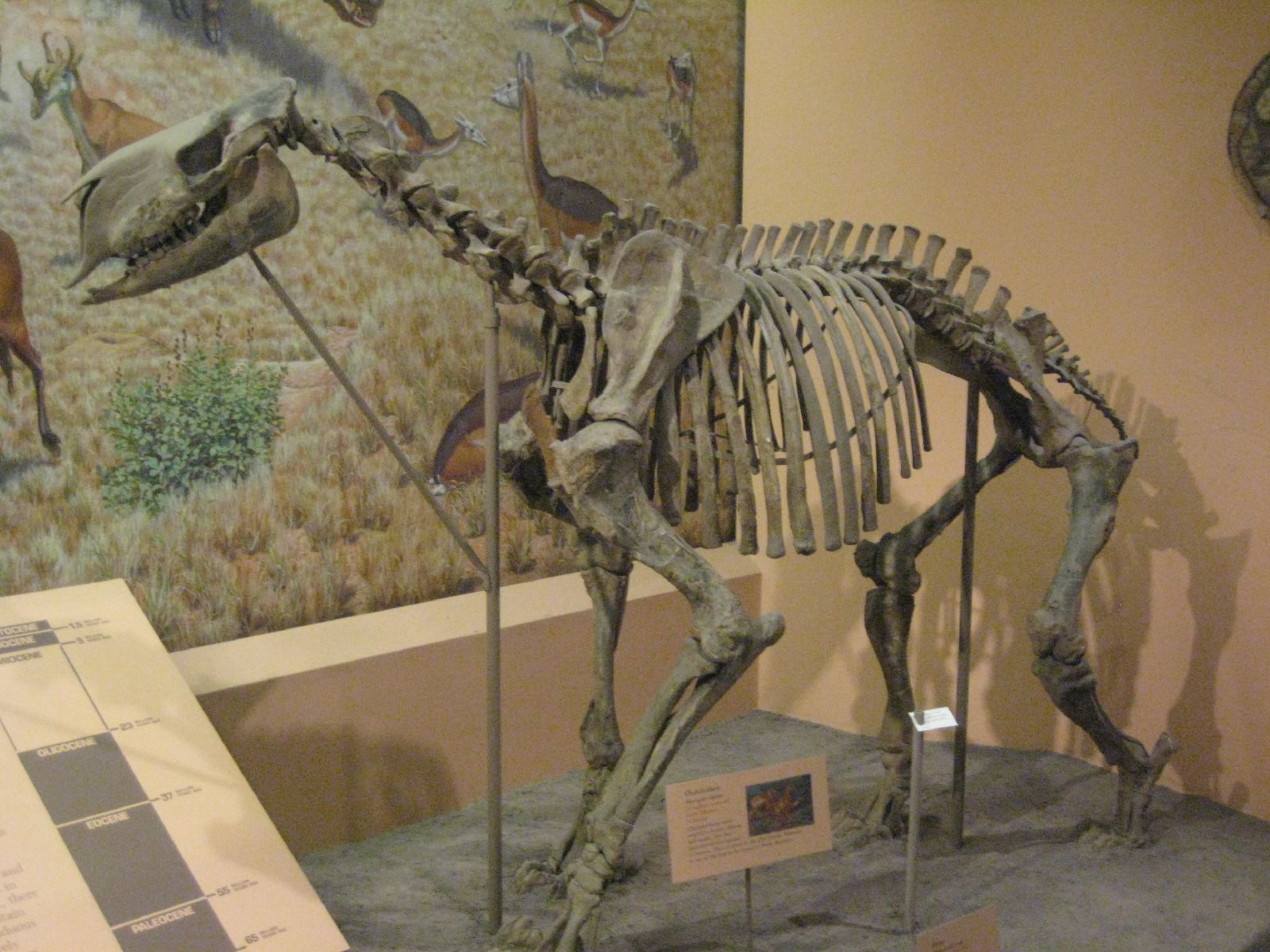
Chalicothere mammal — Moropus elatus
Geologic period: Oligocene — early Arikareean
Age: Oligocene in the Smithsonian catalog.
Feeding: Herbivorous browser.
Evidence: The skeleton and claws are direct evidence. Feeding posture and browsing behavior are reconstructed from anatomy.
Why it matters: Moropus demonstrates that the horse-rhino-tapir branch of mammals once experimented with body plans very unlike any living perissodactyl.
Plain Language Identity: An extinct chalicothere perissodactyl with large claws rather than the hoof-like feet expected in most of its relatives.
What You Are Looking At: A mounted Moropus skeleton showing its long limbs and large claw-bearing feet.
Ecosystem: Oligocene terrestrial ecosystem of the central United States.
Source Urls: https://naturalhistory.si.edu/visit/virtual-tour/current-exhibits/deep-time-virtual-tour-fossil-list; https://www.si.edu/object/nmnhpaleobiology_3342411
Formation: Harrison Formation, Arikaree Group
Find Location: Nebraska, United States
Enrichment Method: SAGE curated research pass; title + scientific name + source scene matched; chronology and taxonomy conflicts retained rather than silently corrected; evidence separated from inference
Scientific name: Moropus elatus
Evidence / representation: comparative_taxon_visual
comparative_taxon_visual
After the Dinosaurs: Mammals, Ice Ages and the World We Inherited.
Media license: CC BY-SA 2.0
https://creativecommons.org/licenses/by-sa/2.0
This object page stays inside SAGE Museum. The Smithsonian link below is provided only as the original scholarly collection record. It opens separately.
VIEW ORIGINAL SMITHSONIAN RECORD ↗