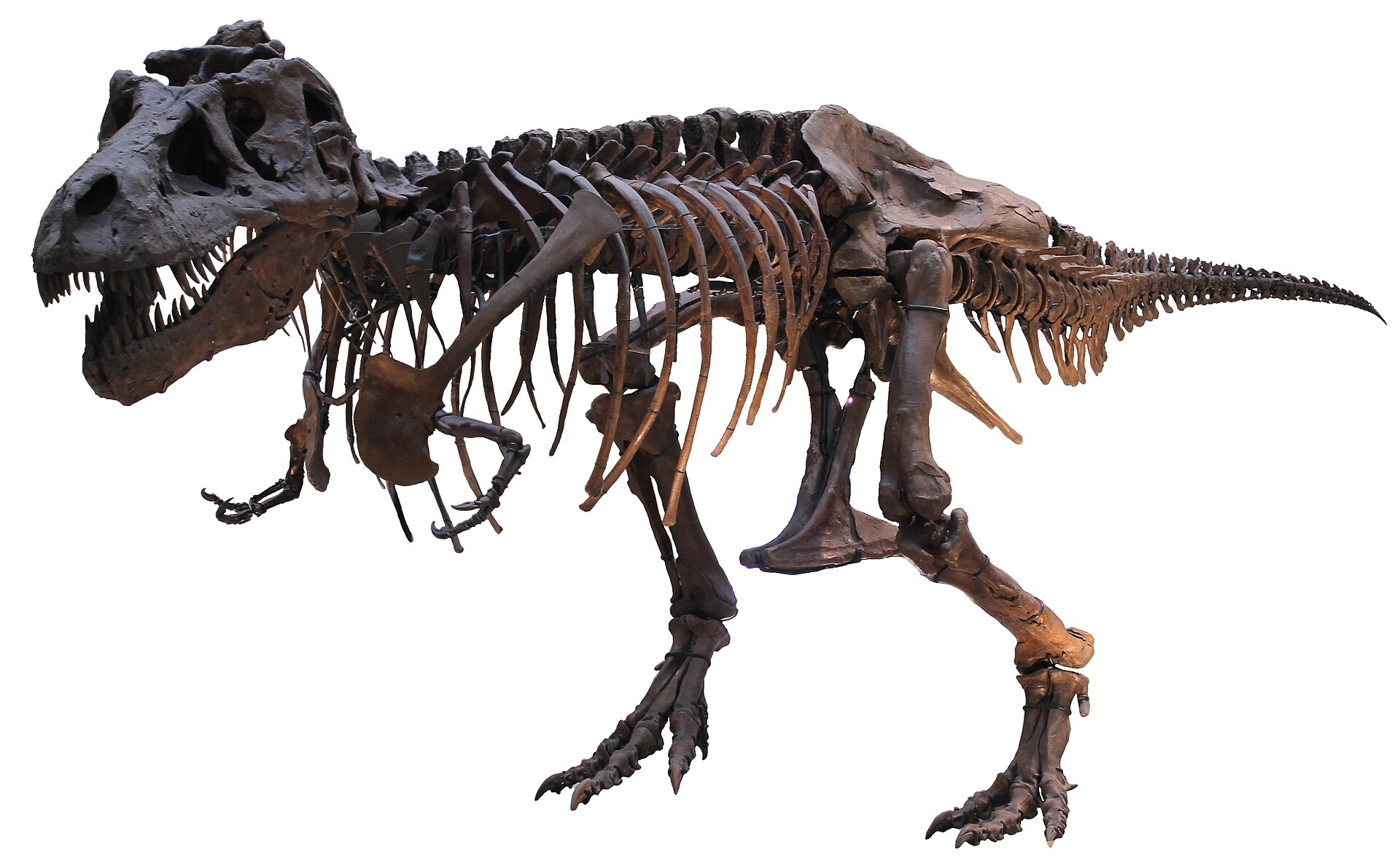
Tyrannosaurid theropod — Tyrannosaurus rex
Geologic period: Latest Cretaceous — Maastrichtian
Age: Latest Cretaceous; documented Smithsonian T. rex teeth from the Hell Creek Formation are Maastrichtian.
Feeding: Carnivorous.
Body plan: Only dental anatomy is represented.
Evidence: The tooth crown and serrations are direct evidence. Independent bite-mark fossils show T. rex both fed on carcasses and attacked living animals.
Why it matters: A single tooth provides direct evidence for the shape, construction and replacement-based feeding system of Tyrannosaurus.
Plain Language Identity: An isolated tooth from Tyrannosaurus rex.
What You Are Looking At: A fossil tooth rather than a complete T. rex skeleton.
Defense Or Attack: Robust serrated teeth formed part of a powerful bone-crushing feeding system.
Ecosystem: Hell Creek terrestrial ecosystem.
Formation: Hell Creek Formation for documented Smithsonian teeth.
Preservation: Isolated fossil tooth.
Open Questions: Do not use one isolated tooth to infer the age or sex of the animal unless diagnostic evidence is present.
Source Urls: https://naturalhistory.si.edu/visit/virtual-tour/current-exhibits/deep-time-virtual-tour-fossil-list; https://www.si.edu/object/tyrannosaurus-rex-osborn-1905:nmnhpaleobiology_3451167
Enrichment Method: SAGE curated research pass; title + scientific name + source scene matched; display reconstruction separated from evidence; provenance uncertainty retained
Scientific name: Tyrannosaurus rex
Evidence / representation: comparative_taxon_visual
comparative_taxon_visual
T. rex & Triceratops: The Last American Dinosaur World.
Media license: CC BY-SA 2.0
https://creativecommons.org/licenses/by-sa/2.0
This object page stays inside SAGE Museum. The Smithsonian link below is provided only as the original scholarly collection record. It opens separately.
VIEW ORIGINAL SMITHSONIAN RECORD ↗