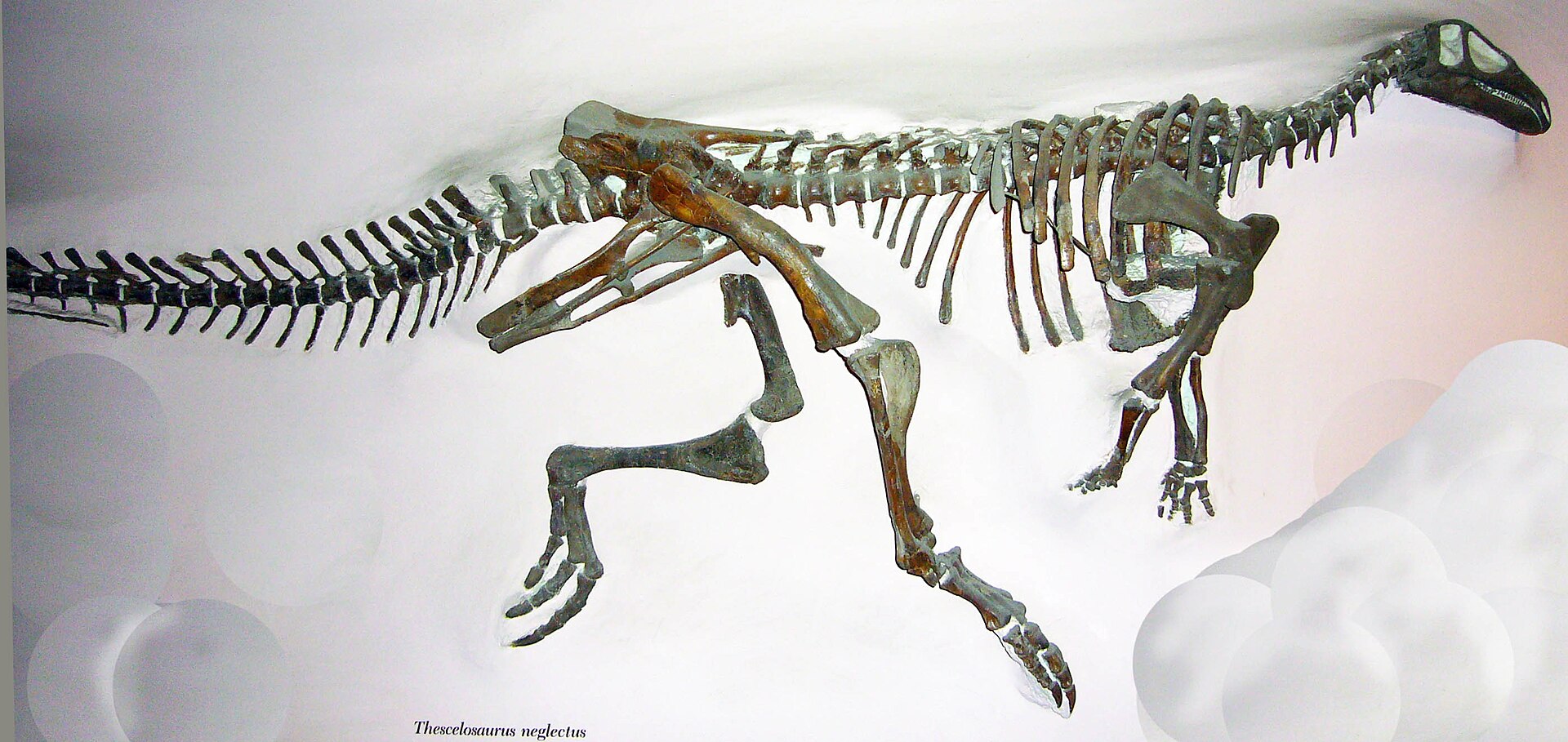
Ornithopod dinosaur — Thescelosaurus neglectus
Geologic period: Latest Cretaceous — Maastrichtian
Age: Late Maastrichtian.
Feeding: Herbivorous.
Locomotion: Primarily terrestrial; bipedal locomotion was important.
Body plan: Relatively robust small-to-medium ornithischian with strong hind limbs and a long tail.
Evidence: Skeleton and skull anatomy are direct evidence. The species is documented from the Hell Creek and Lance formations.
Why it matters: Thescelosaurus shows that the final dinosaur communities contained many smaller herbivores beyond the famous Triceratops and Edmontosaurus.
Plain Language Identity: A medium-sized plant-eating neornithischian dinosaur from the latest Cretaceous of North America.
What You Are Looking At: A composite cast representing the skeleton of Thescelosaurus neglectus.
Ecosystem: Latest Cretaceous terrestrial ecosystems including the Hell Creek and Lance formations.
Preservation: Visitor object is a composite cast.
Specimen Context Note: The species occurs in both Hell Creek and Lance deposits. The exact source specimen underlying this display cast should not be assumed until positively linked.
Open Questions: Do not assign this cast a specific quarry or locality without specimen-level documentation.
Source Urls: https://naturalhistory.si.edu/visit/virtual-tour/current-exhibits/deep-time-virtual-tour-fossil-list; https://pmc.ncbi.nlm.nih.gov/articles/PMC4232843/
Enrichment Method: SAGE curated research pass; title + scientific name + source scene matched; display reconstruction separated from evidence; provenance uncertainty retained
Scientific name: Thescelosaurus neglectus
Evidence / representation: comparative_taxon_visual
comparative_taxon_visual
T. rex & Triceratops: The Last American Dinosaur World.
Media license: CC0
http://creativecommons.org/publicdomain/zero/1.0/deed.en
This object page stays inside SAGE Museum. The Smithsonian link below is provided only as the original scholarly collection record. It opens separately.
VIEW ORIGINAL SMITHSONIAN RECORD ↗