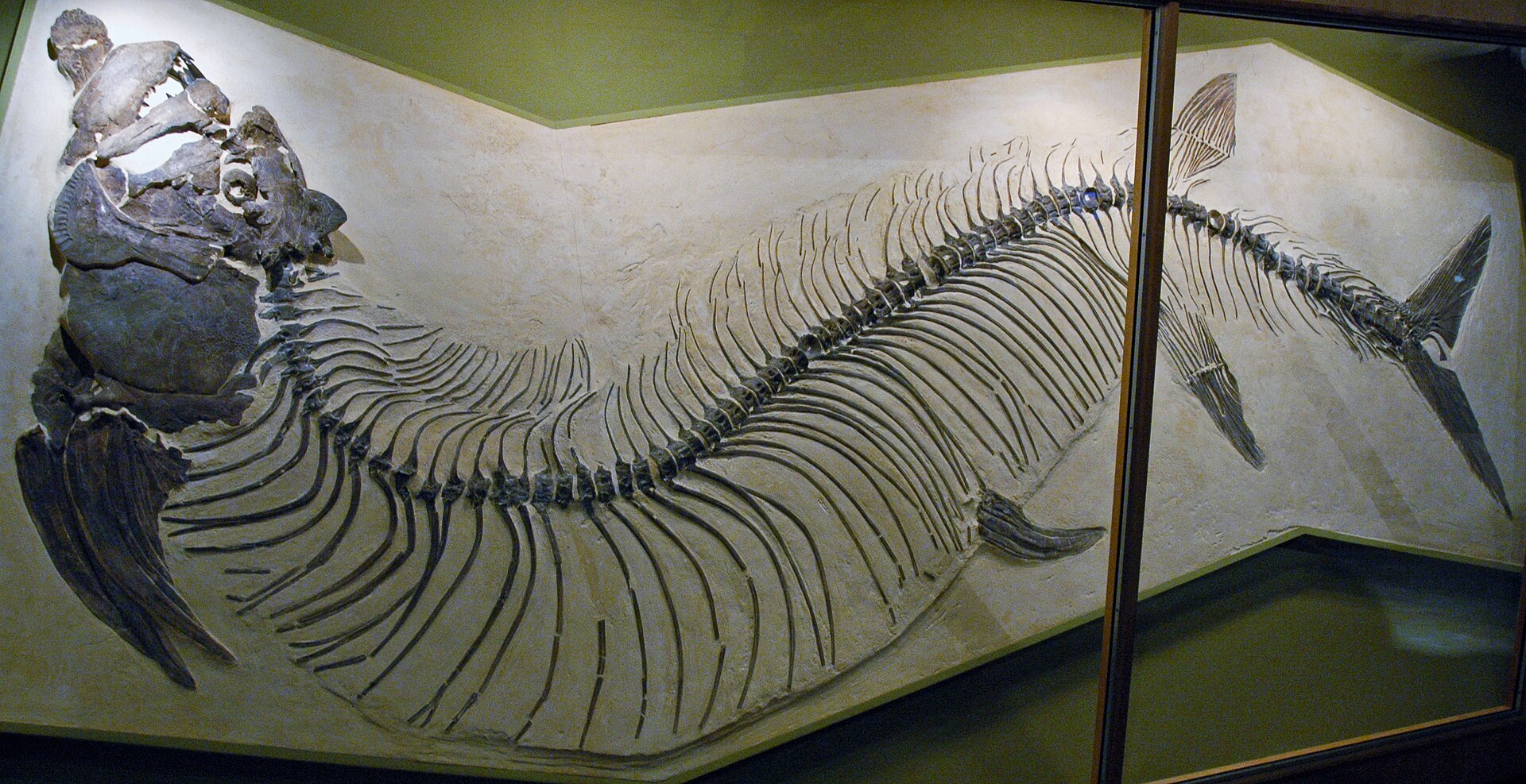
Large predatory fish — Xiphactinus audax
Geologic period: Late Cretaceous — Coniacian for documented Smithsonian material
Age: Late Cretaceous.
Feeding: Carnivorous.
Locomotion: Active marine swimming.
Body plan: Large streamlined fish with a powerful skull and large pointed teeth.
Evidence: Skull and teeth are direct evidence. Other famous Xiphactinus specimens preserve swallowed fish, providing rare direct dietary evidence.
Why it matters: Xiphactinus reminds visitors that dinosaurs did not dominate every ecosystem. Large predatory fishes remained major predators in Cretaceous seas.
Plain Language Identity: A huge predatory bony fish from Late Cretaceous seas.
What You Are Looking At: A fossil skull from the large predatory fish Xiphactinus audax.
Defense Or Attack: Large jaws and teeth were its prey-capture system.
Ecosystem: Late Cretaceous marine ecosystems of North America.
Preservation: Original fossil skull.
Open Questions: Do not assume every Xiphactinus individual ate the same prey.
Source Urls: https://naturalhistory.si.edu/visit/virtual-tour/current-exhibits/deep-time-virtual-tour-fossil-list; https://www.si.edu/object/xiphactinus-audax-leidy:nmnhpaleobiology_3423486
Enrichment Method: SAGE curated research pass; title + scientific name + source scene matched; comparative chronology retained; evidence separated from inference
Scientific name: Xiphactinus audax
Evidence / representation: comparative_taxon_visual
comparative_taxon_visual
Cretaceous Worlds: Dinosaurs at Their Most Diverse.
Media license: CC BY 2.0
https://creativecommons.org/licenses/by/2.0
This object page stays inside SAGE Museum. The Smithsonian link below is provided only as the original scholarly collection record. It opens separately.
VIEW ORIGINAL SMITHSONIAN RECORD ↗