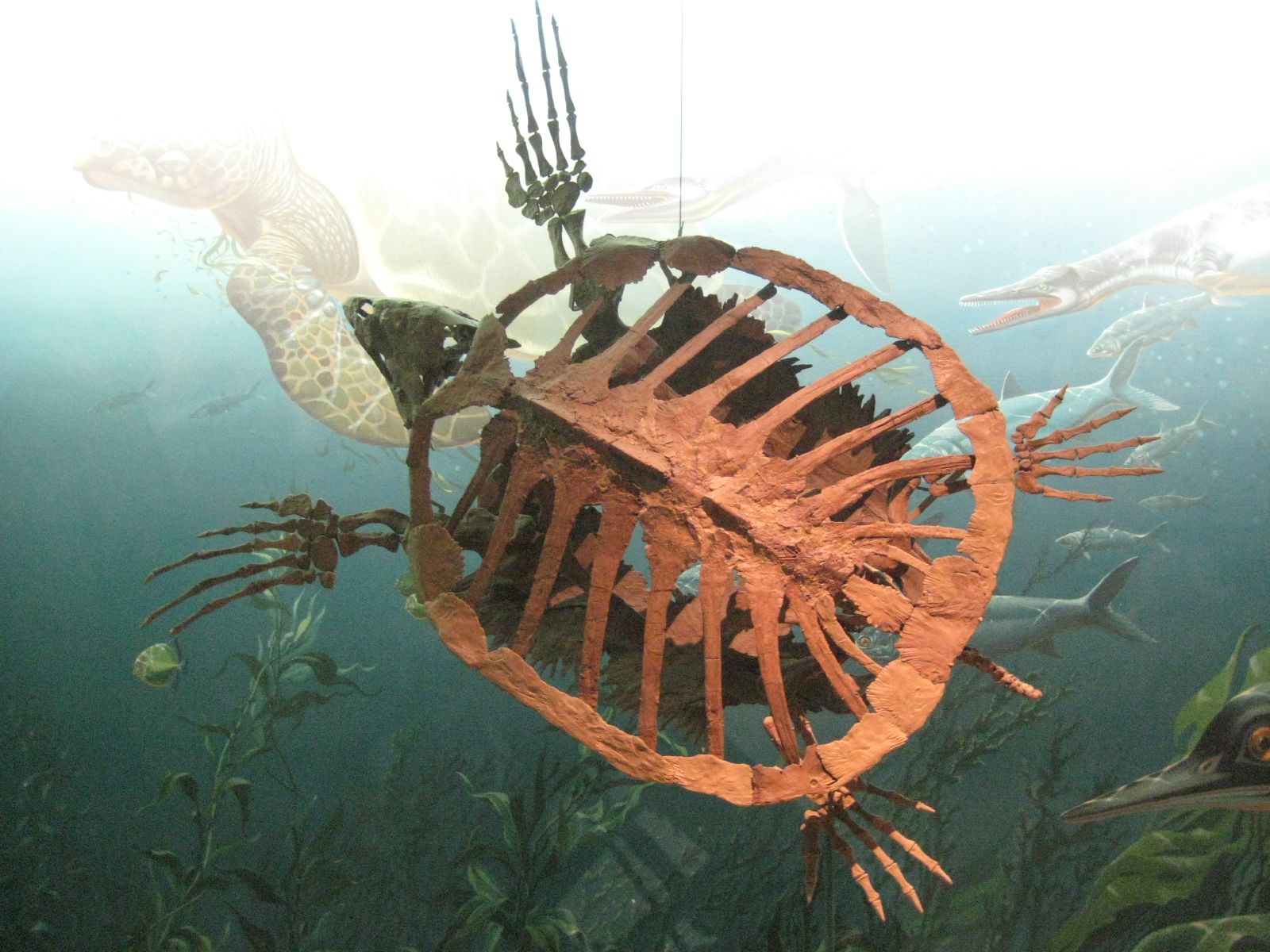
Sea turtle — Protostega gigas
Geologic period: Late Cretaceous
Age: Approximately 85 million years old in the Smithsonian interpretation.
Feeding: Marine feeding; exact preferred prey remains reconstructed.
Locomotion: Open-water swimming.
Body plan: Very large marine turtle with powerful flipper-like limbs and a reduced shell compared with many modern hard-shelled turtles.
Evidence: Skeleton and limb anatomy directly establish large body size and marine adaptation.
Why it matters: Protostega demonstrates that giant marine turtles evolved while dinosaurs still dominated terrestrial ecosystems.
Plain Language Identity: One of the largest sea turtles known from the Late Cretaceous.
What You Are Looking At: Fossil skeletal remains of the giant marine turtle Protostega gigas.
Ecosystem: Western Interior Seaway.
Preservation: Original fossil skeletal material.
Open Questions: Do not assume its ecology was identical to any one living sea-turtle species.
Source Urls: https://naturalhistory.si.edu/visit/virtual-tour/current-exhibits/deep-time-virtual-tour-fossil-list; https://ocean.si.edu/ocean-life/reptiles/one-large-turtle-protostega-gigas
Enrichment Method: SAGE curated research pass; title + scientific name + source scene matched; comparative chronology retained; evidence separated from inference
Scientific name: Protostega gigas
Evidence / representation: comparative_taxon_visual
comparative_taxon_visual
Cretaceous Worlds: Dinosaurs at Their Most Diverse.
Media license: CC BY-SA 2.0
https://creativecommons.org/licenses/by-sa/2.0
This object page stays inside SAGE Museum. The Smithsonian link below is provided only as the original scholarly collection record. It opens separately.
VIEW ORIGINAL SMITHSONIAN RECORD ↗