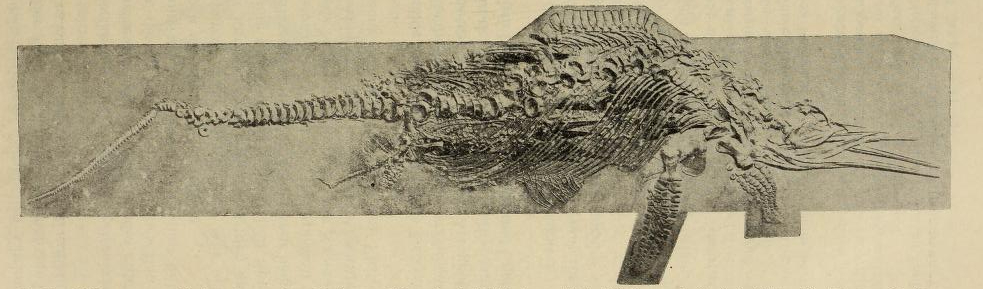
Ichthyosaur marine reptile — Stenopterygius quadriscissus
Geologic period: Early Jurassic — Toarcian
Age: Early Toarcian.
Feeding: Predatory marine feeder. Fossil stomach contents and teeth provide evidence for prey use.
Locomotion: Fully aquatic swimming.
Body plan: Streamlined fish-shaped reptile with paddle-like limbs, a long snout and powerful tail-driven swimming anatomy.
Evidence: Skeletons, soft-tissue outlines, stomach contents and pregnant individuals provide unusually rich evidence.
Why it matters: Stenopterygius demonstrates how completely a reptile lineage could become adapted to marine life. Exceptional specimens also preserve embryos and body outlines.
Plain Language Identity: A streamlined Early Jurassic ichthyosaur exceptionally well known from the Posidonia Shale of Germany.
What You Are Looking At: An ichthyosaur skeleton representing an animal strongly adapted for open-water swimming.
Ecosystem: Early Jurassic marine ecosystem.
Formation: Posidonienschiefer Formation for classic German material.
Find Location: Germany.
Preservation: Exceptional marine reptile fossil preservation.
Open Questions: Do not treat its fish-like body as evidence that ichthyosaurs were fish. They were reptiles.
Source Urls: https://naturalhistory.si.edu/visit/virtual-tour/current-exhibits/deep-time-virtual-tour-fossil-list; https://www.si.edu/object/nmnhpaleobiology_3426629; https://palaeo-electronica.org/content/2020/3078-revision-of-hauffiopteryx
Enrichment Method: SAGE curated research pass; title + scientific name + source scene matched; historic taxonomy retained where relevant; evidence separated from inference
Scientific name: Stenopterygius quadriscissus
Evidence / representation: comparative_taxon_visual
comparative_taxon_visual
Jurassic Giants: Size, Teeth, Armor and Survival.
Media license: Public domain
This object page stays inside SAGE Museum. The Smithsonian link below is provided only as the original scholarly collection record. It opens separately.
VIEW ORIGINAL SMITHSONIAN RECORD ↗