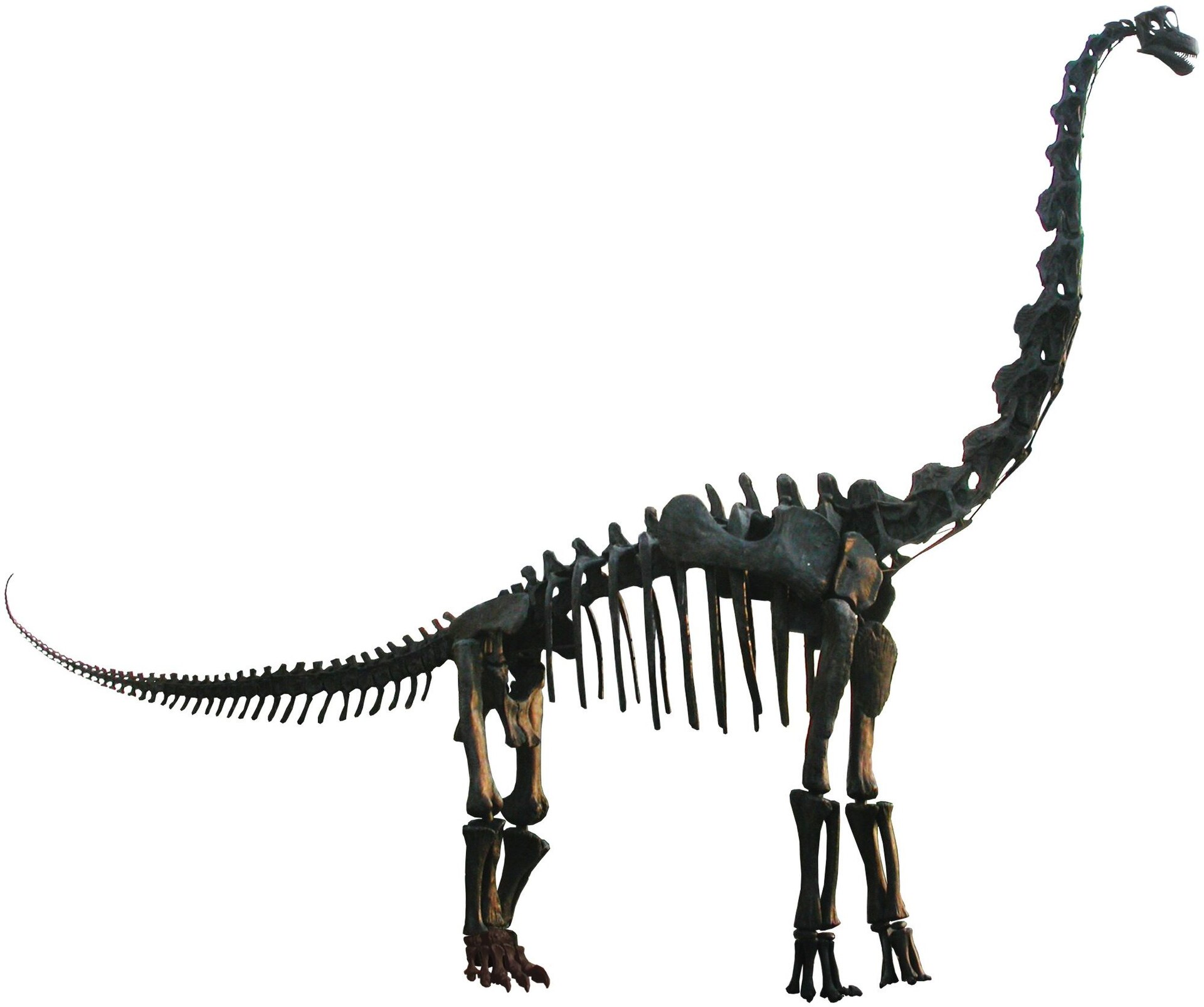
Sauropod dinosaur — Brachiosaurus altithorax
Geologic period: Late Jurassic
Age: Late Jurassic.
Feeding: Herbivorous.
Locomotion: Terrestrial quadruped.
Body plan: Very large sauropod with unusually long forelimbs, a long neck and elevated shoulder region.
Evidence: The humerus is direct fossil evidence. Whole-body posture comes from combining multiple Brachiosaurus specimens.
Why it matters: A single limb bone can reveal enormous amounts about body size, weight-bearing anatomy and proportions even when an entire skeleton is not present.
Plain Language Identity: An enormous Late Jurassic brachiosaurid sauropod represented here by a forelimb bone.
What You Are Looking At: A fossil humerus—the large upper bone of the forelimb—from Brachiosaurus altithorax.
Ecosystem: Morrison Formation ecosystem.
Formation: Morrison Formation.
Find Location: Montrose County, Colorado, United States for the documented Smithsonian humerus.
Preservation: Original fossil humerus.
Open Questions: Do not imply the visitor is seeing a complete Brachiosaurus when the display object is a single arm bone.
Source Urls: https://naturalhistory.si.edu/visit/virtual-tour/current-exhibits/deep-time-virtual-tour-fossil-list; https://www.si.edu/object/brachiosaurus-altithorax-riggs-1903:nmnhpaleobiology_3449148
Enrichment Method: SAGE curated research pass; title + scientific name + source scene matched; historic taxonomy retained where relevant; evidence separated from inference
Scientific name: Brachiosaurus altithorax
Evidence / representation: comparative_taxon_visual
comparative_taxon_visual
Jurassic Giants: Size, Teeth, Armor and Survival.
Media license: CC BY 3.0
https://creativecommons.org/licenses/by/3.0
This object page stays inside SAGE Museum. The Smithsonian link below is provided only as the original scholarly collection record. It opens separately.
VIEW ORIGINAL SMITHSONIAN RECORD ↗