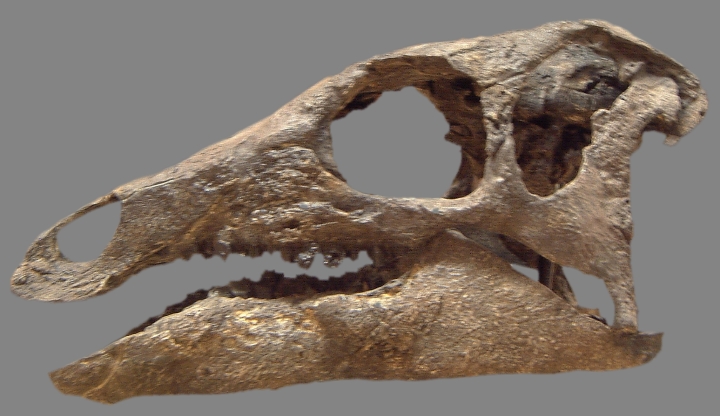
Juvenile ornithopod dinosaur — Camptosaurus dispar
Geologic period: Late Jurassic — Kimmeridgian
Age: Late Jurassic.
Feeding: Herbivorous.
Locomotion: Primarily terrestrial; ornithopod anatomy allowed bipedal locomotion and use of the forelimbs in some postures.
Body plan: Medium-sized ornithopod dinosaur with strong hind limbs, shorter forelimbs and a deep herbivorous skull.
Evidence: Juvenile skeletal proportions are direct evidence. Growth trajectory is reconstructed by comparison with older individuals.
Why it matters: A juvenile specimen lets the exhibit discuss dinosaur growth instead of treating every species as if adults and young were anatomically identical.
Plain Language Identity: A juvenile individual of the Late Jurassic herbivorous ornithopod Camptosaurus dispar.
What You Are Looking At: A composite cast representing a young Camptosaurus.
Ecosystem: Late Jurassic Morrison Formation.
Preservation: Composite cast.
Open Questions: Do not automatically interpret every difference between juvenile and adult bones as a species difference.
Source Urls: https://naturalhistory.si.edu/visit/virtual-tour/current-exhibits/deep-time-virtual-tour-fossil-list; https://www.si.edu/object/camptosaurus-dispar-marsh-1879:nmnhpaleobiology_3441008; https://www.si.edu/object/nmnhpaleobiology_3441009
Enrichment Method: SAGE curated research pass; title + scientific name + source scene matched; historic taxonomy retained where relevant; evidence separated from inference
Scientific name: Camptosaurus dispar
Evidence / representation: comparative_taxon_visual
comparative_taxon_visual
Jurassic Giants: Size, Teeth, Armor and Survival.
Media license: Public domain
This object page stays inside SAGE Museum. The Smithsonian link below is provided only as the original scholarly collection record. It opens separately.
VIEW ORIGINAL SMITHSONIAN RECORD ↗