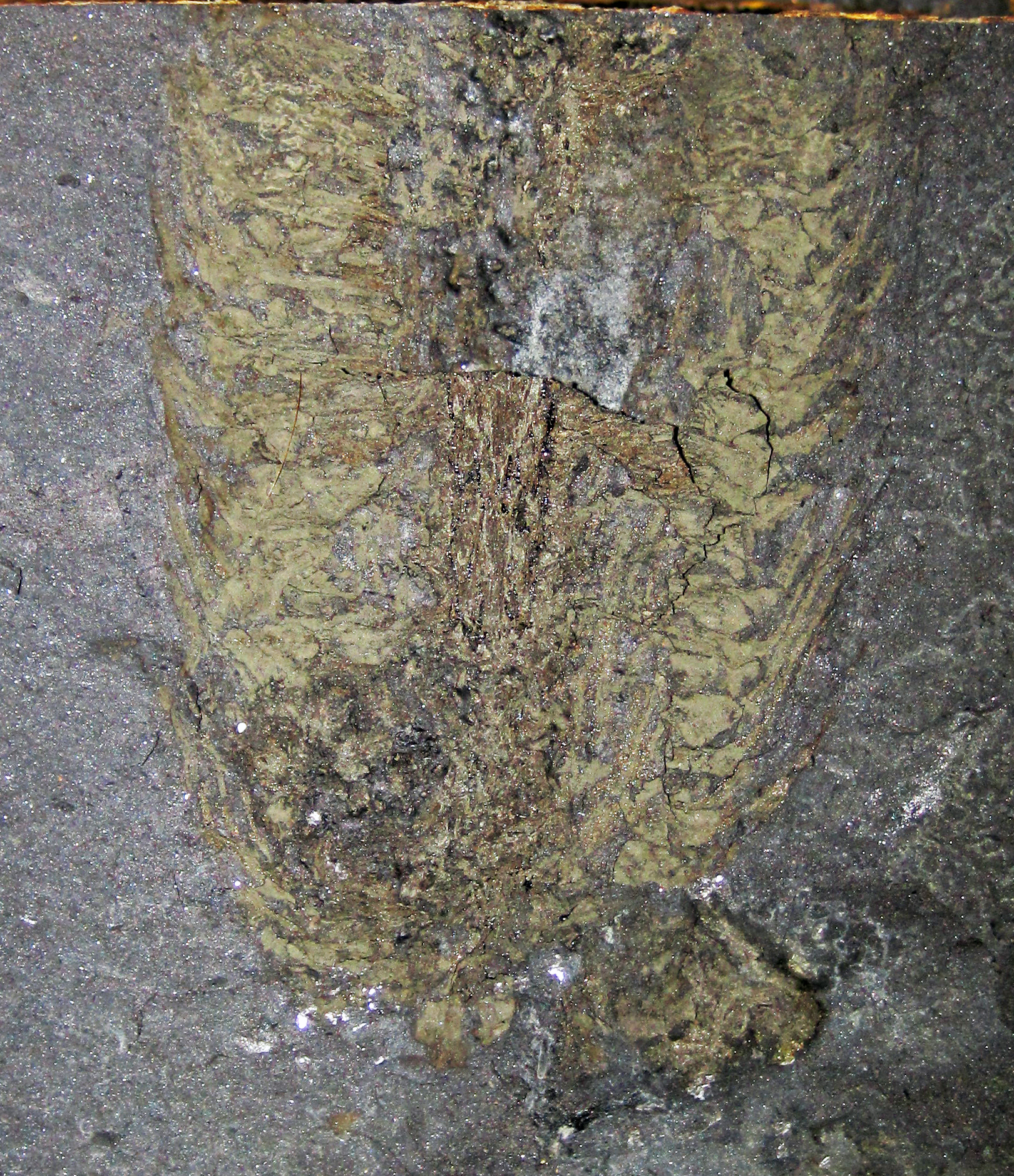
Lycopsid tree — Lepidostrobus sp.
Geologic period: Carboniferous
Age: Carboniferous; no more precise age is assigned to the Smithsonian genus-level specimen here.
Feeding: Photosynthetic parent plant.
Body plan: Central cone axis bearing tightly arranged fertile sporophylls and sporangia.
Evidence: Cone structure and sporangia are direct fossil evidence. Connecting an isolated Lepidostrobus cone to a particular parent-tree species may require additional evidence.
Why it matters: Lepidostrobus reveals how giant lycopsid trees reproduced and helps connect isolated reproductive fossils with the towering plants of Carboniferous forests.
Plain Language Identity: A cone-like reproductive structure produced by giant Carboniferous lycopsid trees.
What You Are Looking At: A fossil reproductive cone, or strobilus, rather than the trunk or crown of the entire tree.
Ecosystem: Carboniferous wetland and coal-swamp ecosystems.
Preservation: Compression, impression or anatomically preserved reproductive structure.
Open Questions: Do not assign this genus-level cone to a specific Lepidodendron tree unless the association is demonstrated.
Source Urls: https://naturalhistory.si.edu/visit/virtual-tour/current-exhibits/deep-time-virtual-tour-fossil-list; https://qrius.si.edu/browse/object/10021639; https://www.si.edu/object/lepidodendron-tree:nmnheducation_10021639
Enrichment Method: SAGE curated research pass; title and scientific name matched; evidence separated from inference
Scientific name: Lepidostrobus sp.
Evidence / representation: comparative_exact_taxon_visual
comparative_exact_taxon_visual
Life Conquers the Land: Forests, Fishes and the First Four-Legged Worlds.
Media license: CC BY 2.0
https://creativecommons.org/licenses/by/2.0
This object page stays inside SAGE Museum. The Smithsonian link below is provided only as the original scholarly collection record. It opens separately.
VIEW ORIGINAL SMITHSONIAN RECORD ↗