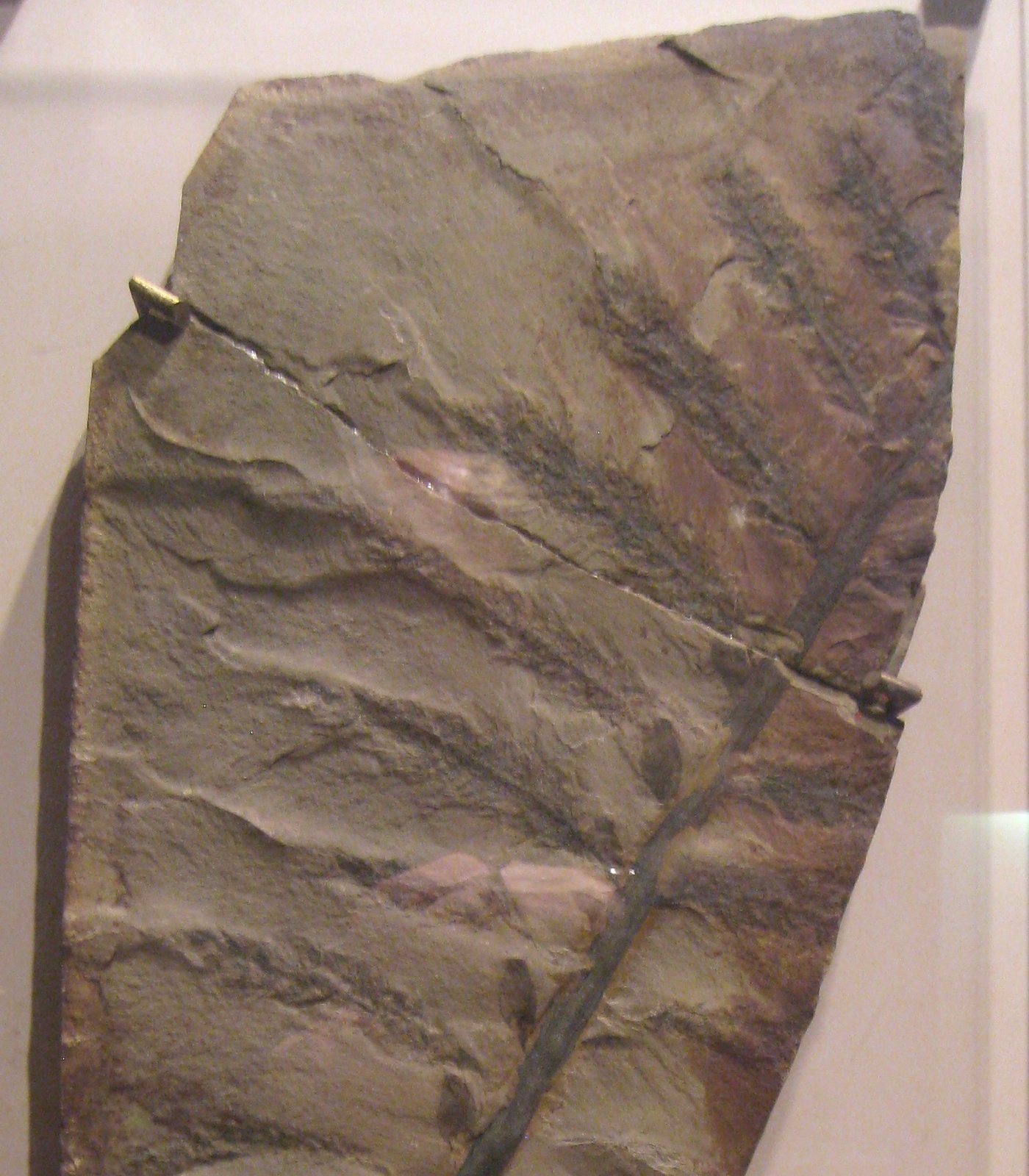
Progymnosperm — Archaeopteris hibernica
Geologic period: Late Devonian
Age: Late Devonian.
Feeding: Photosynthetic plant.
Body plan: Large woody tree with fern-like leafy branches and an extensive root system.
Evidence: The exhibit leaf is direct evidence of foliage. Whole-tree reconstructions are built from leaves, wood, branches, roots and associated Archaeopteris fossils.
Why it matters: Archaeopteris helped transform terrestrial landscapes by producing large woody forests and extensive root systems long before flowering plants evolved.
Plain Language Identity: A tree-sized Late Devonian progymnosperm combining fern-like foliage with woody growth.
What You Are Looking At: Fossil foliage belonging to Archaeopteris rather than an entire preserved tree.
Ecosystem: Late Devonian forest ecosystem.
Preservation: Leaf fossil.
Open Questions: Do not imply that the visitor is seeing a complete Archaeopteris tree when the displayed object is foliage.
Source Urls: https://naturalhistory.si.edu/visit/virtual-tour/current-exhibits/deep-time-virtual-tour-fossil-list; https://pubs.usgs.gov/bul/1013/report.pdf; https://www.smithsonianmag.com/science-nature/385-million-year-old-fossils-reveal-worlds-oldest-forest-had-modern-tree-roots-180973810/
Enrichment Method: SAGE curated research pass; title and scientific name matched; evidence separated from inference
Scientific name: Archaeopteris hibernica
Evidence / representation: comparative_exact_taxon_visual
comparative_exact_taxon_visual
Life Conquers the Land: Forests, Fishes and the First Four-Legged Worlds.
Media license: Public domain
This object page stays inside SAGE Museum. The Smithsonian link below is provided only as the original scholarly collection record. It opens separately.
VIEW ORIGINAL SMITHSONIAN RECORD ↗