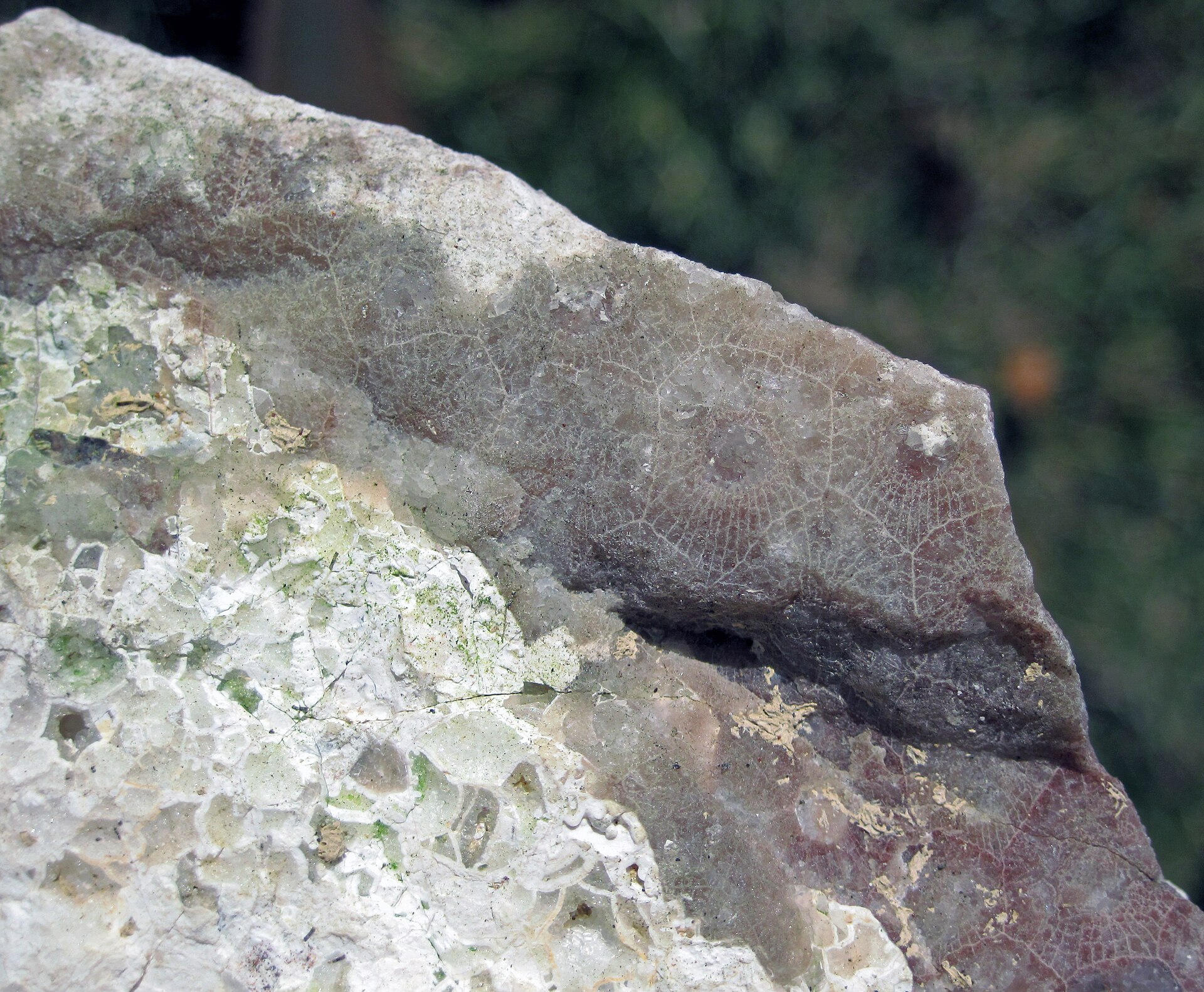
Rugose coral / Petoskey stone — Hexagonaria sp.
Geologic period: Devonian
Age: Devonian; the exact numeric age and species of this Smithsonian Hexagonaria sp. specimen are not assigned here.
Feeding: Individual polyps captured food from seawater; behavior is inferred from coral anatomy and relatives.
Body plan: Colonial framework of closely packed corallites.
Evidence: Corallite skeletons are direct evidence of the colony. Soft polyps are reconstructed.
Why it matters: Hexagonaria helps reconstruct the tropical seas that covered parts of North America during the Devonian.
Plain Language Identity: A colonial rugose coral of the genus Hexagonaria, the group that includes the famous Petoskey-stone fossils.
What You Are Looking At: A colony composed of many repeating skeletal cups, each originally occupied by an individual coral polyp.
Ecosystem: Warm Devonian marine environment.
Preservation: Fossilized colonial coral skeleton.
Open Questions: Do not automatically call the Smithsonian genus-level specimen Hexagonaria percarinata unless its species identity is independently confirmed.
Source Urls: https://naturalhistory.si.edu/visit/virtual-tour/current-exhibits/deep-time-virtual-tour-fossil-list; https://lsa.umich.edu/paleontology/resources/beyond-exhibits/hexagonaria-percarinatum.html
Enrichment Method: SAGE curated research pass; title and scientific name matched; evidence separated from inference
Scientific name: Hexagonaria sp.
Evidence / representation: comparative_exact_taxon_visual
comparative_exact_taxon_visual
Oceans Before Dinosaurs: The Rise of Complex Animal Life.
Media license: CC BY 2.0
https://creativecommons.org/licenses/by/2.0
This object page stays inside SAGE Museum. The Smithsonian link below is provided only as the original scholarly collection record. It opens separately.
VIEW ORIGINAL SMITHSONIAN RECORD ↗