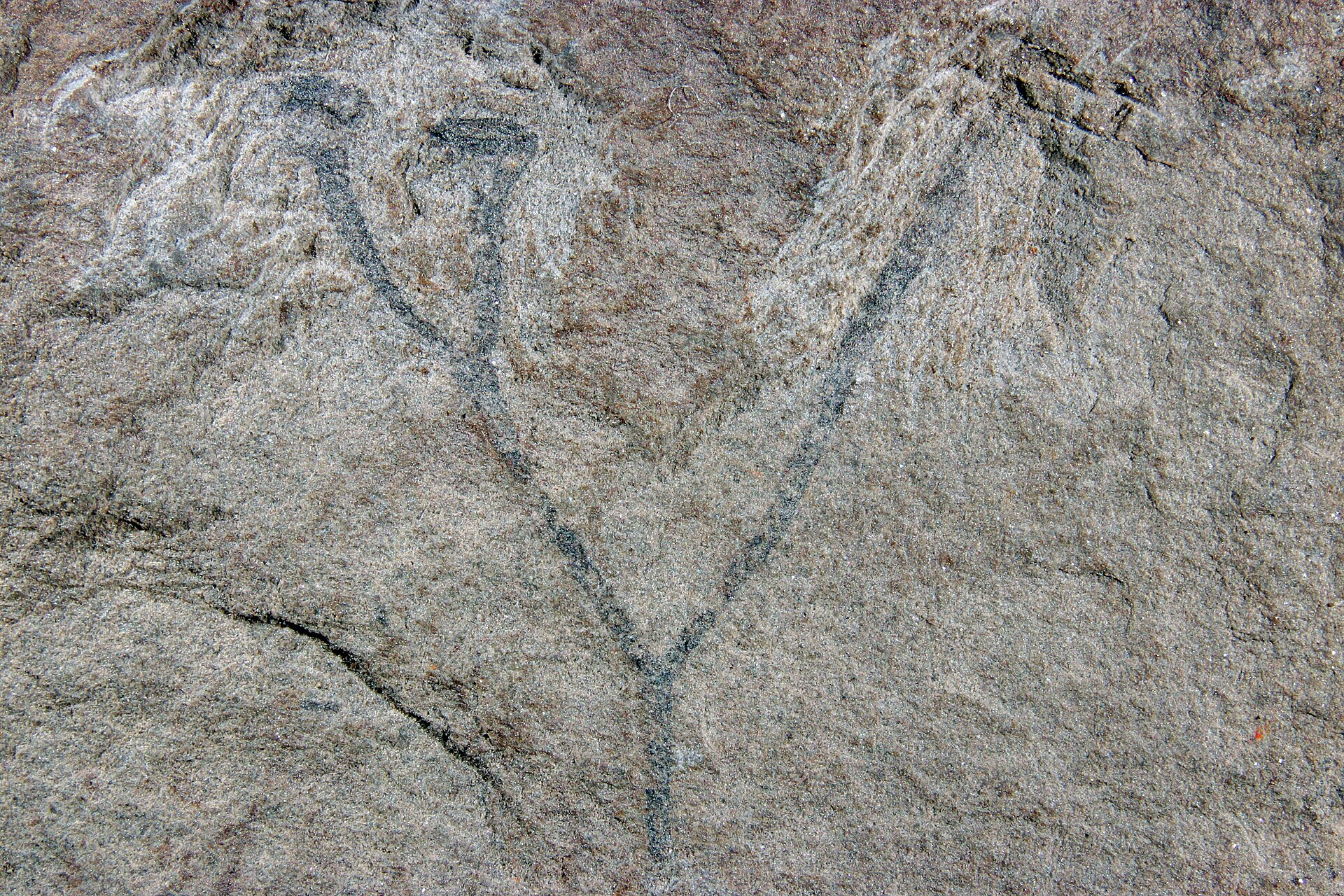
Early vascular plant — Cooksonia pertoni
Geologic period: Silurian
Age: Silurian.
Feeding: Photosynthetic plant.
Body plan: Simple leafless branching axes with terminal sporangia.
Evidence: Branching axes and reproductive structures are directly preserved.
Why it matters: Cooksonia illustrates an early stage in the evolution of vascular plants and the greening of Earth's continents.
Plain Language Identity: One of the classic early vascular land plants.
What You Are Looking At: Small branching stems ending in spore-producing structures.
Ecosystem: Early terrestrial environment before large forests developed.
Preservation: Compression or impression plant fossil.
Open Questions: Do not reconstruct it as a large leafy modern plant.
Source Urls: https://naturalhistory.si.edu/visit/virtual-tour/current-exhibits/deep-time-virtual-tour-fossil-list; https://www.si.edu/object/cooksonia-pertoni:nmnhpaleobiology_12307064
Enrichment Method: SAGE curated research pass; title and scientific name matched; evidence separated from inference
Scientific name: Cooksonia pertoni
Evidence / representation: comparative_exact_taxon_visual
comparative_exact_taxon_visual
Oceans Before Dinosaurs: The Rise of Complex Animal Life.
Media license: CC BY-SA 4.0
https://creativecommons.org/licenses/by-sa/4.0
This object page stays inside SAGE Museum. The Smithsonian link below is provided only as the original scholarly collection record. It opens separately.
VIEW ORIGINAL SMITHSONIAN RECORD ↗