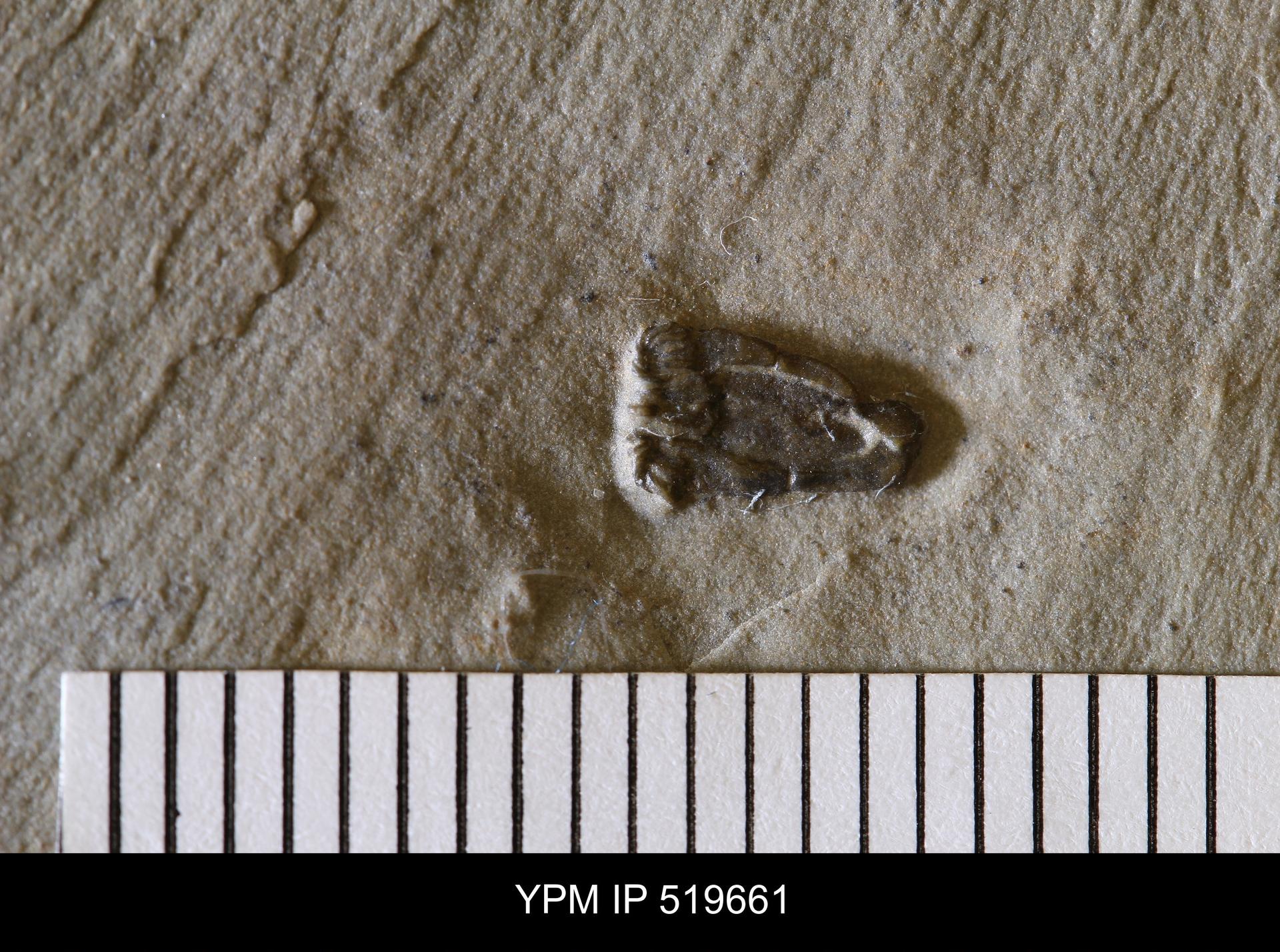
Early echinoderm — Ctenocystis utahensis
Geologic period: Middle Cambrian
Age: Lower Middle Cambrian.
Feeding: Feeding interpretation is based on the specialized anterior apparatus.
Locomotion: Interpreted as a free-living bottom-dwelling animal.
Body plan: Flattened flexible theca with near-bilateral symmetry and a ctenoid feeding apparatus.
Evidence: Body plates and feeding apparatus are fossil evidence. Mode of life is reconstructed from anatomy.
Why it matters: Ctenocystis shows how strange and experimental early echinoderm body plans were before familiar modern forms evolved.
Plain Language Identity: A primitive Cambrian echinoderm unlike modern starfish or sea urchins.
What You Are Looking At: A flattened body enclosed by skeletal plates with a distinctive comb-like feeding structure.
Ecosystem: Cambrian seafloor ecosystem.
Preservation: Skeletal body fossil.
Open Questions: Its appearance should not be forced into a modern starfish or sea-urchin body plan.
Source Urls: https://naturalhistory.si.edu/visit/virtual-tour/current-exhibits/deep-time-virtual-tour-fossil-list; https://pubmed.ncbi.nlm.nih.gov/17742852/
Enrichment Method: SAGE curated research pass; title and scientific name matched; evidence separated from inference
Scientific name: Ctenocystis utahensis
Evidence / representation: comparative_exact_taxon_visual
comparative_exact_taxon_visual
Oceans Before Dinosaurs: The Rise of Complex Animal Life.
Media license: CC0
http://creativecommons.org/publicdomain/zero/1.0/deed.en
This object page stays inside SAGE Museum. The Smithsonian link below is provided only as the original scholarly collection record. It opens separately.
VIEW ORIGINAL SMITHSONIAN RECORD ↗