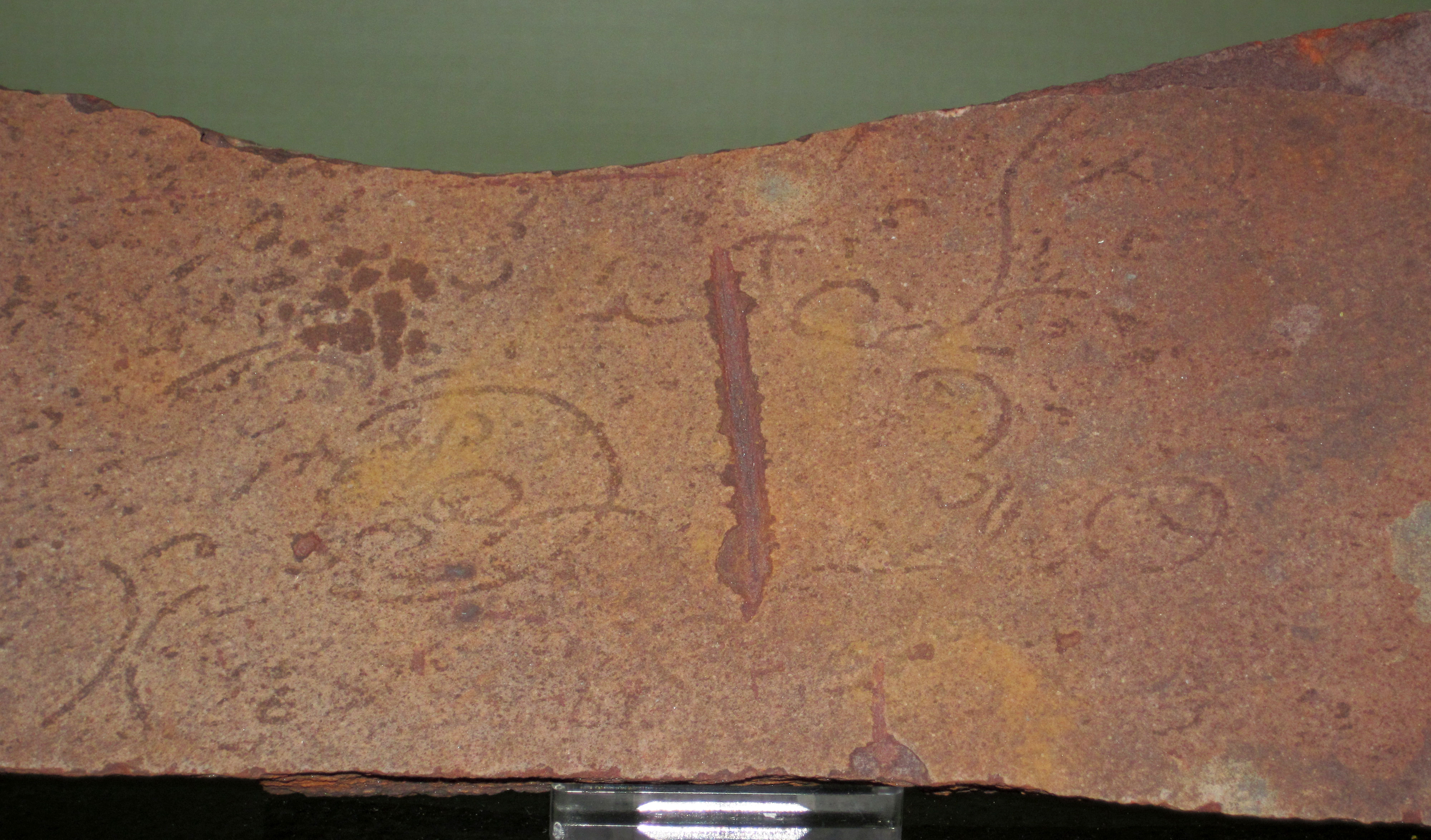
Photosynthetic alga — Grypania sp.
Geologic period: Precambrian — Early Proterozoic (Smithsonian catalog terminology)
Age: Early Proterozoic; the cited Smithsonian catalog record does not provide a numeric age.
Feeding: Not directly preserved.
Evidence: Smithsonian catalog identification, stratigraphic placement and specimen morphology.
Why it matters: Grypania helps show that large visible biological structures existed long before abundant complex animal life.
Plain Language Identity: Large coiled Proterozoic fossil interpreted in the Smithsonian exhibit as a photosynthetic alga.
What You Are Looking At: A fossil assigned to Grypania sp., preserved in rocks of the Negaunee Iron Formation.
Formation: Negaunee Iron Formation
Find Location: Michigan, United States
Preservation: Fossil specimen; exact preservation mode is not stated in the cited catalog entry.
Open Questions: Detailed physiology, behavior and cellular organization cannot be established from this specimen alone.
Source Urls: https://naturalhistory.si.edu/visit/virtual-tour/current-exhibits/deep-time-virtual-tour-fossil-list; https://www.si.edu/object/nmnhpaleobiology_3339482
Enrichment Method: SAGE curated research pass; evidence separated from inference
Scientific name: Grypania sp.
Evidence / representation: comparative_taxon_visual
comparative_taxon_visual
Reading Deep Time: How Rocks, Fossils and Time Become Evidence.
Media license: CC BY 2.0
https://creativecommons.org/licenses/by/2.0/
This object page stays inside SAGE Museum. The Smithsonian link below is provided only as the original scholarly collection record. It opens separately.
VIEW ORIGINAL SMITHSONIAN RECORD ↗