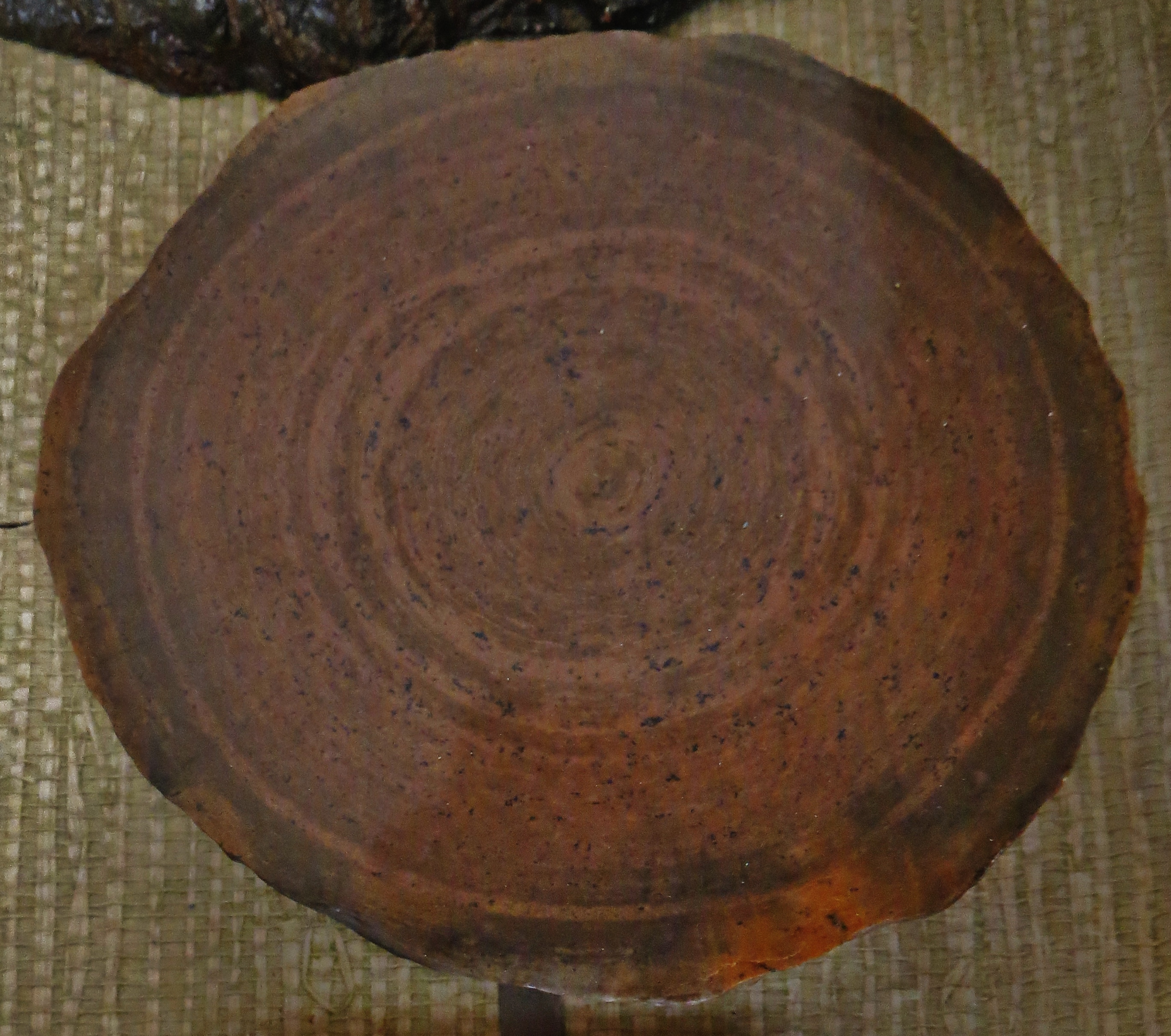
Microbial structure / possible cyanobacteria — Conophyton sp.
Geologic period: Proterozoic
Age: Approximately 1 billion to 720 million years ago.
Feeding: Not applicable as an individual-body interpretation.
Body plan: Layered microbial-sedimentary structure rather than a single animal or plant body fossil.
Evidence: The Smithsonian identifies this Conophyton example as a stromatolite and explains microbial sediment trapping as the origin of the layers.
Why it matters: Stromatolites preserve evidence of ancient microbial ecosystems from long before animals dominated Earth.
Plain Language Identity: A stromatolite — a layered structure produced through interactions between microbial communities and sediment.
What You Are Looking At: Layered rock structure identified as Conophyton sp.
Preservation: Layered sedimentary structure.
Open Questions: The structure itself is evidence. Details of the individual microorganisms are reconstructed from stromatolite science rather than preserved as complete organisms here.
Source Urls: https://naturalhistory.si.edu/visit/virtual-tour/current-exhibits/deep-time-virtual-tour-fossil-list; https://www.si.edu/newsdesk/factsheets/david-h-koch-hall-fossils-deep-time
Enrichment Method: SAGE curated research pass; evidence separated from inference
Scientific name: Conophyton sp.
Evidence / representation: comparative_taxon_visual
comparative_taxon_visual
Reading Deep Time: How Rocks, Fossils and Time Become Evidence.
Media license: CC BY-SA 4.0
https://creativecommons.org/licenses/by-sa/4.0/
This object page stays inside SAGE Museum. The Smithsonian link below is provided only as the original scholarly collection record. It opens separately.
VIEW ORIGINAL SMITHSONIAN RECORD ↗